

Description
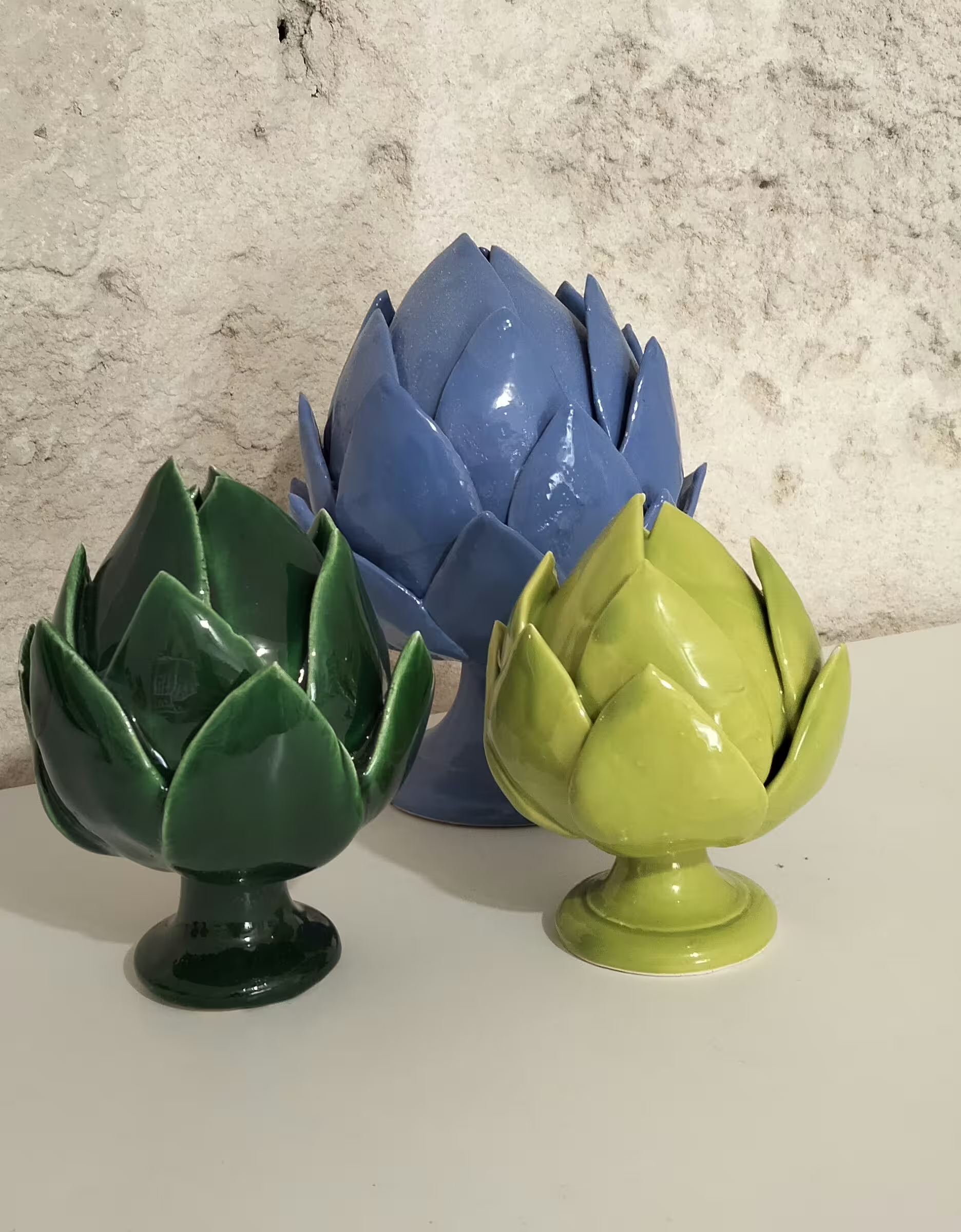
Grottaglie Ceramic Artichoke
General Description:
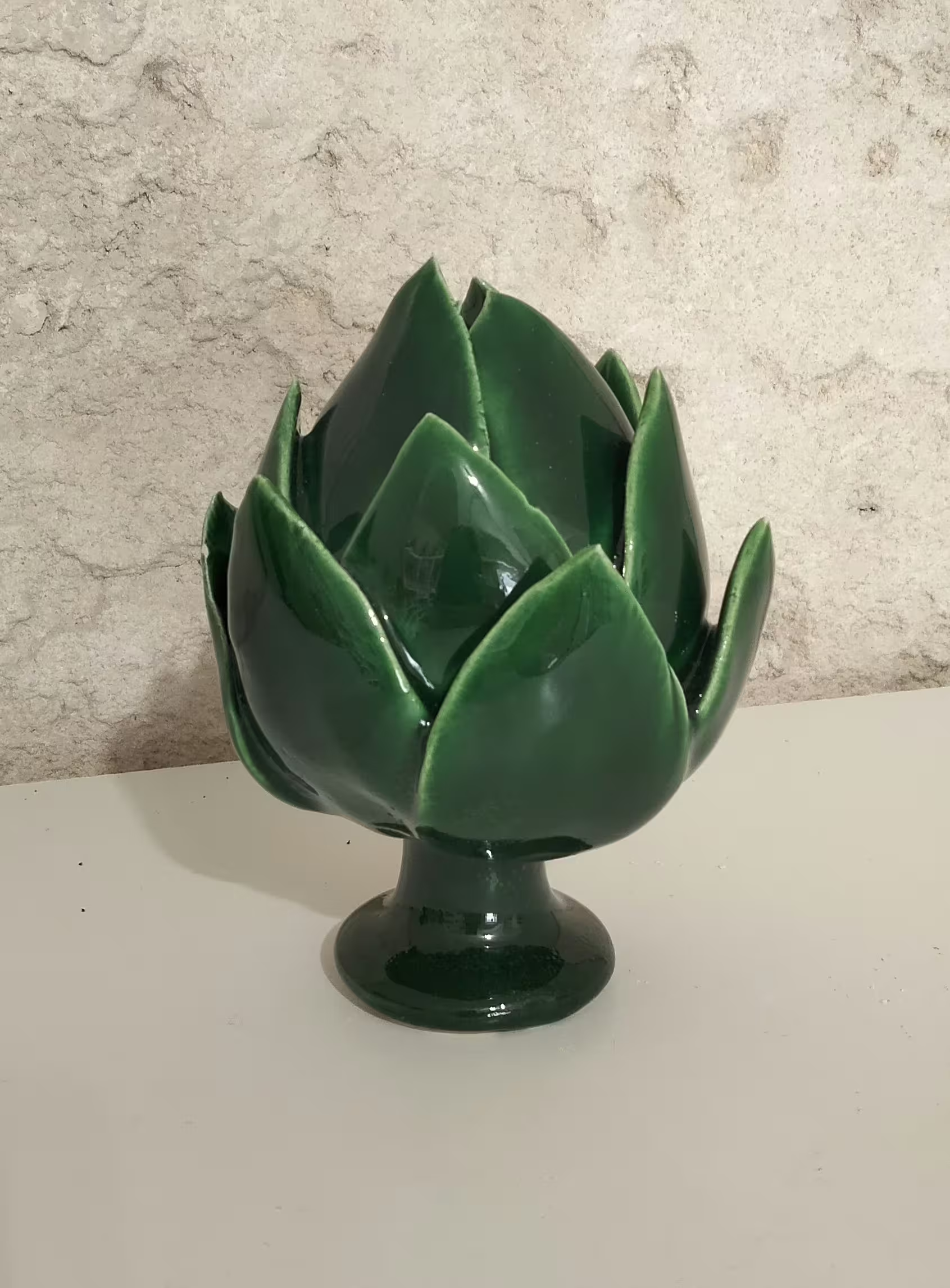
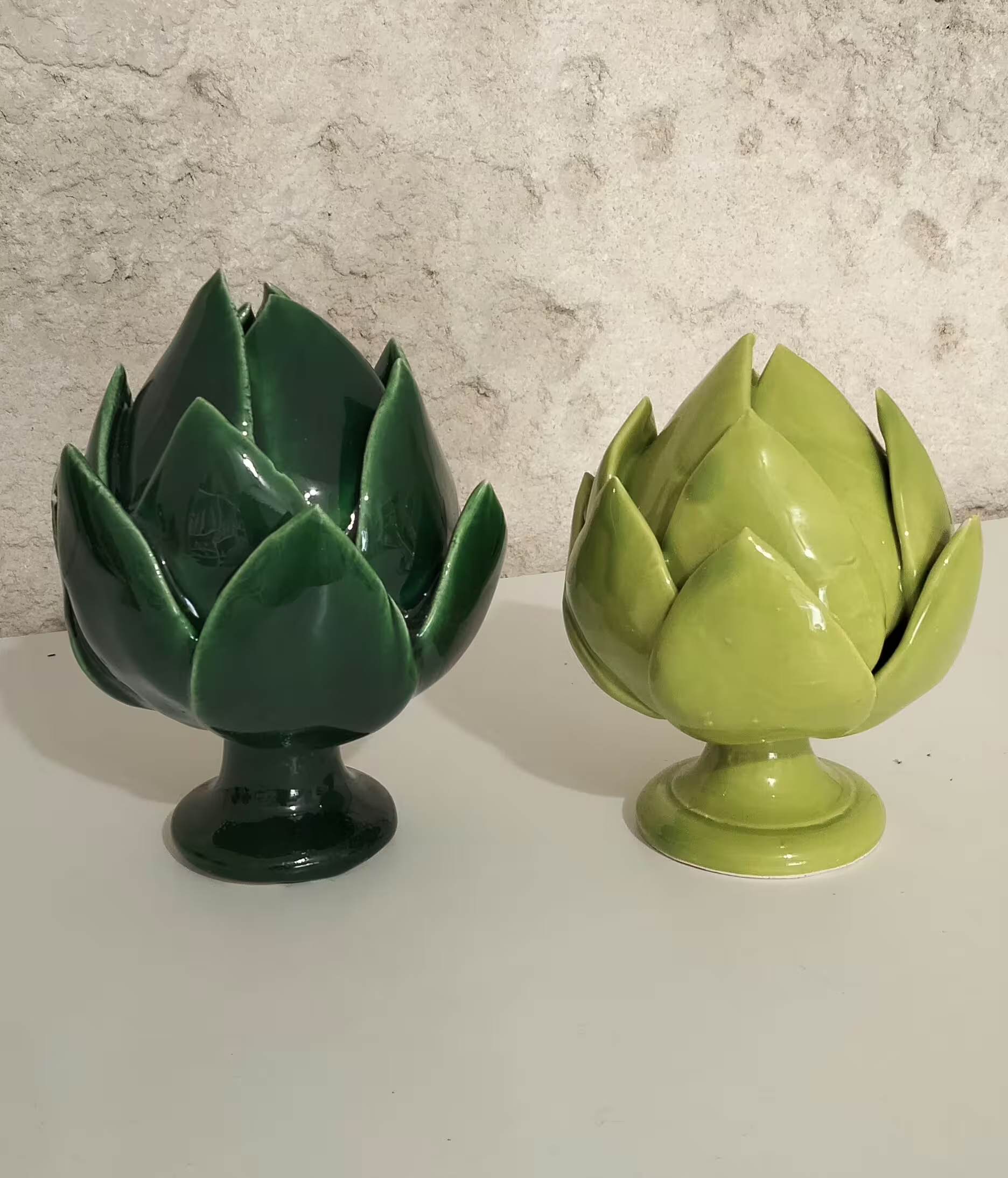
The Grottaglie ceramic artichoke is one of the most iconic and symbolic decorative forms in the Apulian ceramic tradition. Made entirely by hand by master potters in the famous ceramics district of Grottaglie (province of Taranto), this piece combines technical skill, symbolic value, and the refined aesthetic typical of local craftsmanship.
Shape and Structure:
The piece reproduces with extraordinary fidelity the features of an artichoke, a flower-vegetable that also holds strong symbolic significance in Puglia.
-
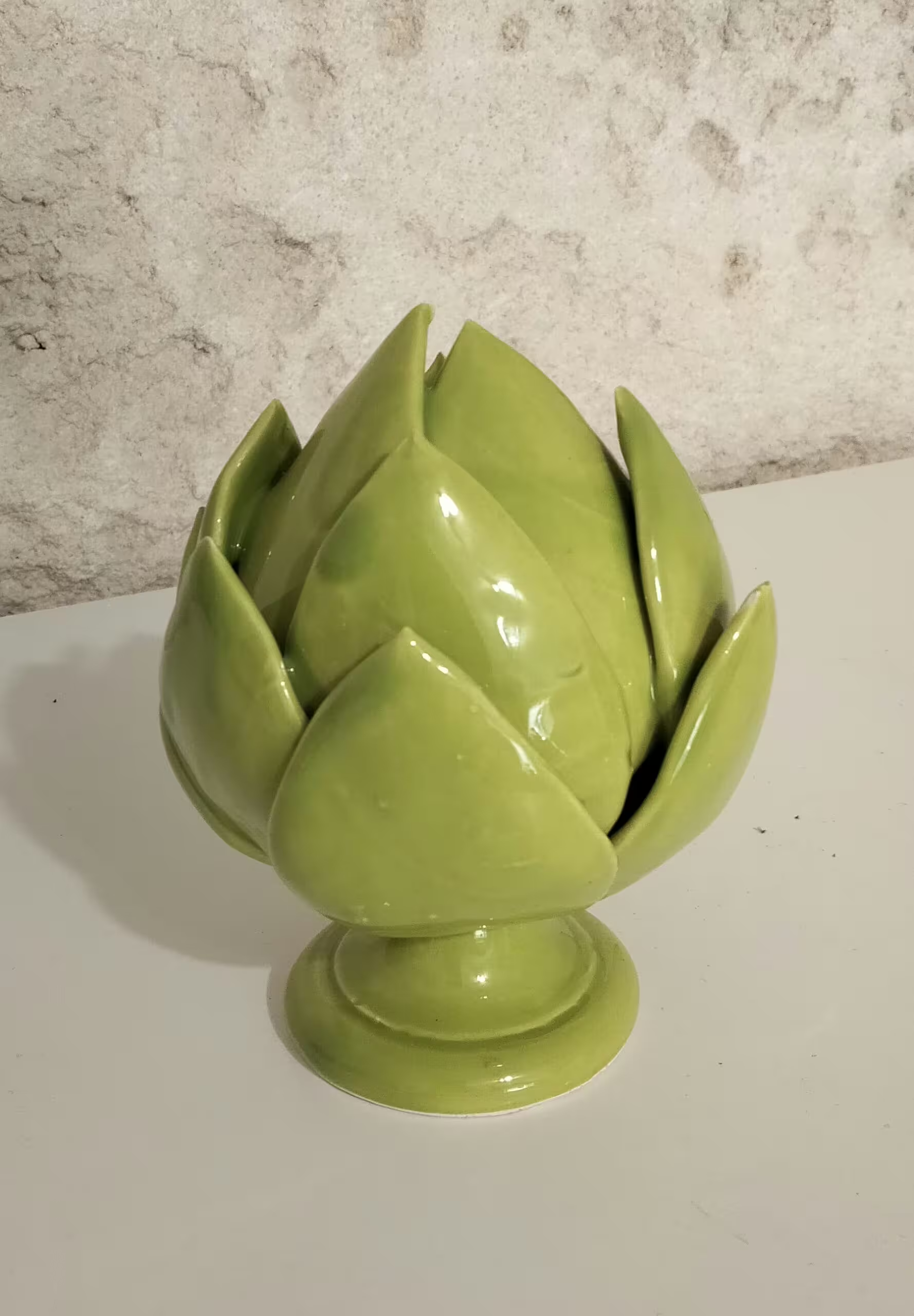
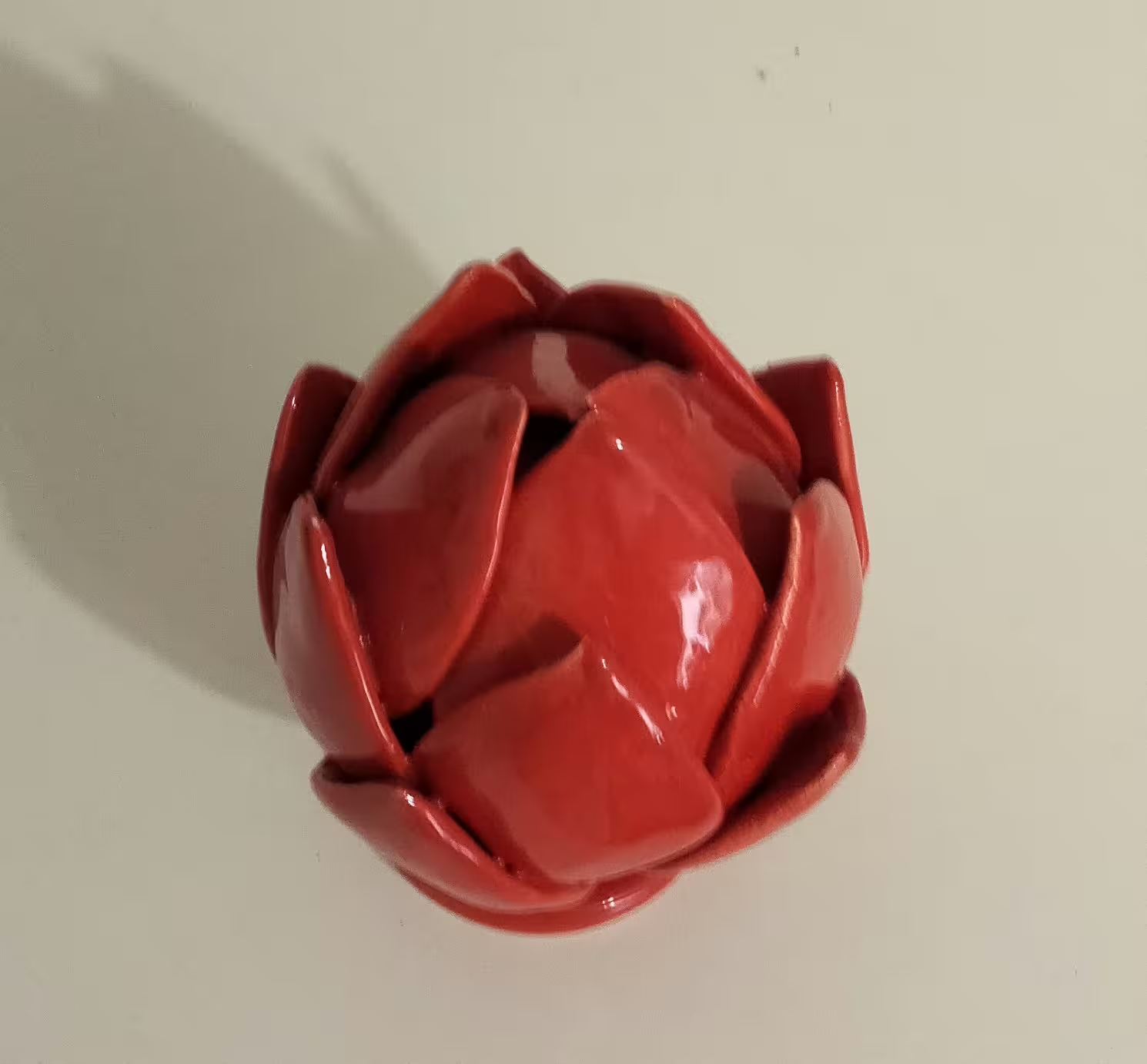
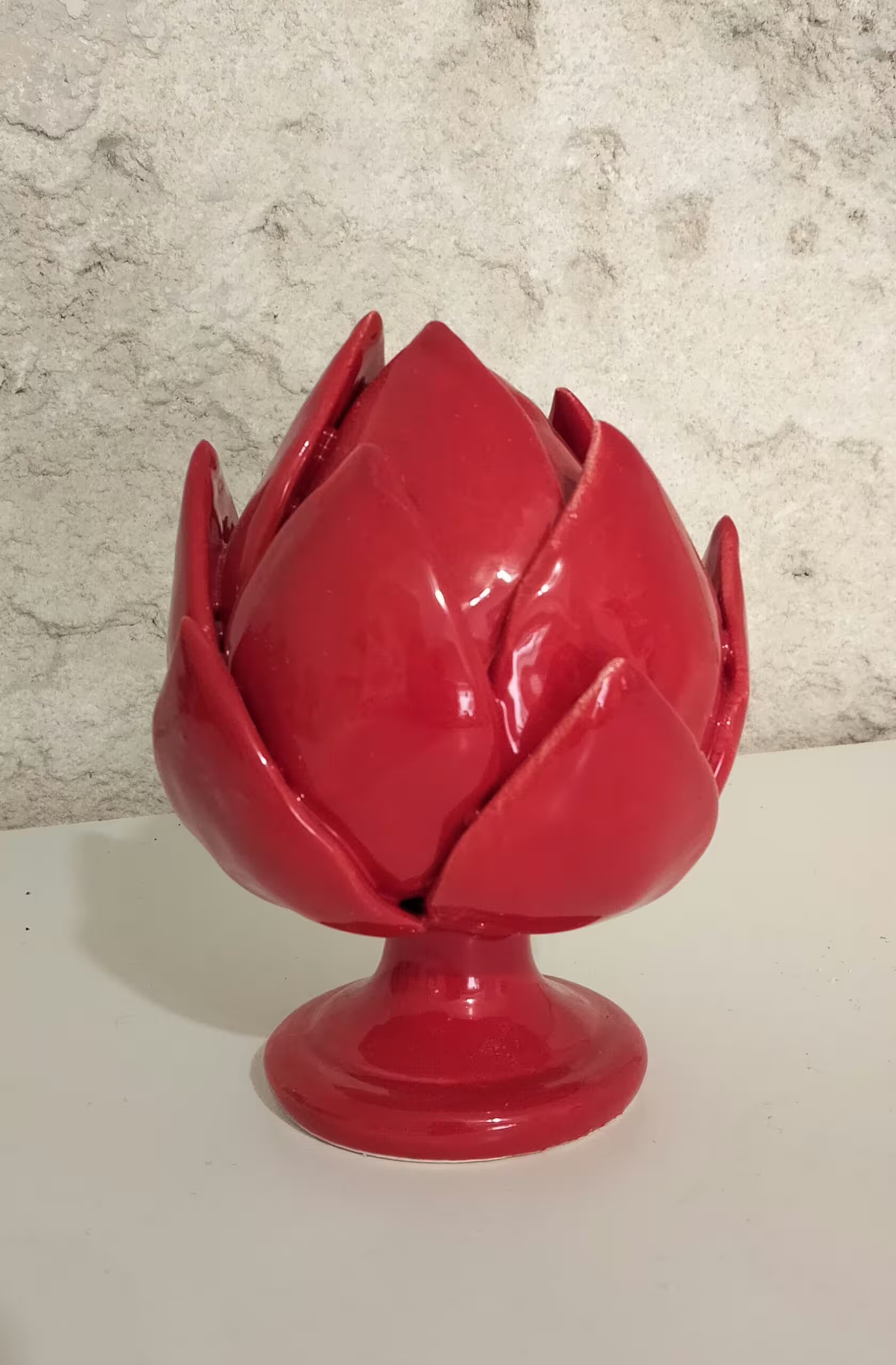
Body: The bulb consists of a succession of overlapping bracts (leaves), each shaped by hand and arranged in a spiral around the central core.
-
Base: The artichoke often rests on a foot or a small turned column, sometimes decorated with geometric or floral motifs.
-
Upper opening: In some versions, the artichoke is closed, while in others it is “open,” forming a sort of lamp or candleholder, revealing a concave space or cavity inside designed to hold the light.
Materials and technique:
The object is made of local terracotta (red Apulian clay), then coated with a glossy or semi-glossy glaze that enhances its luster. Shaping is done by hand or on a potter’s wheel, followed by an initial firing (“biscuit firing”) and subsequently by glazing and a second high-temperature firing.
The leaves are applied individually, requiring great skill and precision: each bract is shaped, thinned, and slightly curved to give the piece a sense of movement.
Colors and decorations:
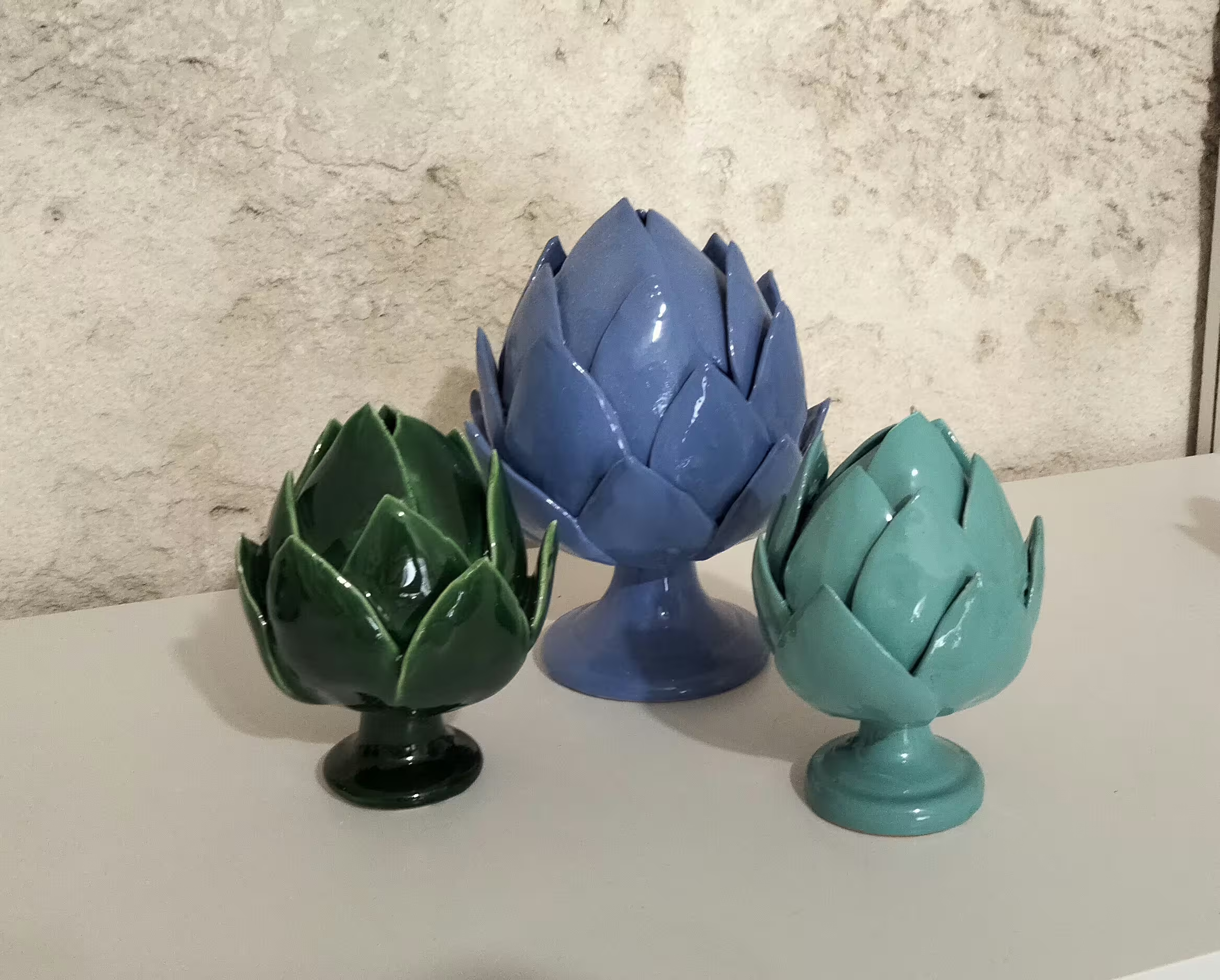
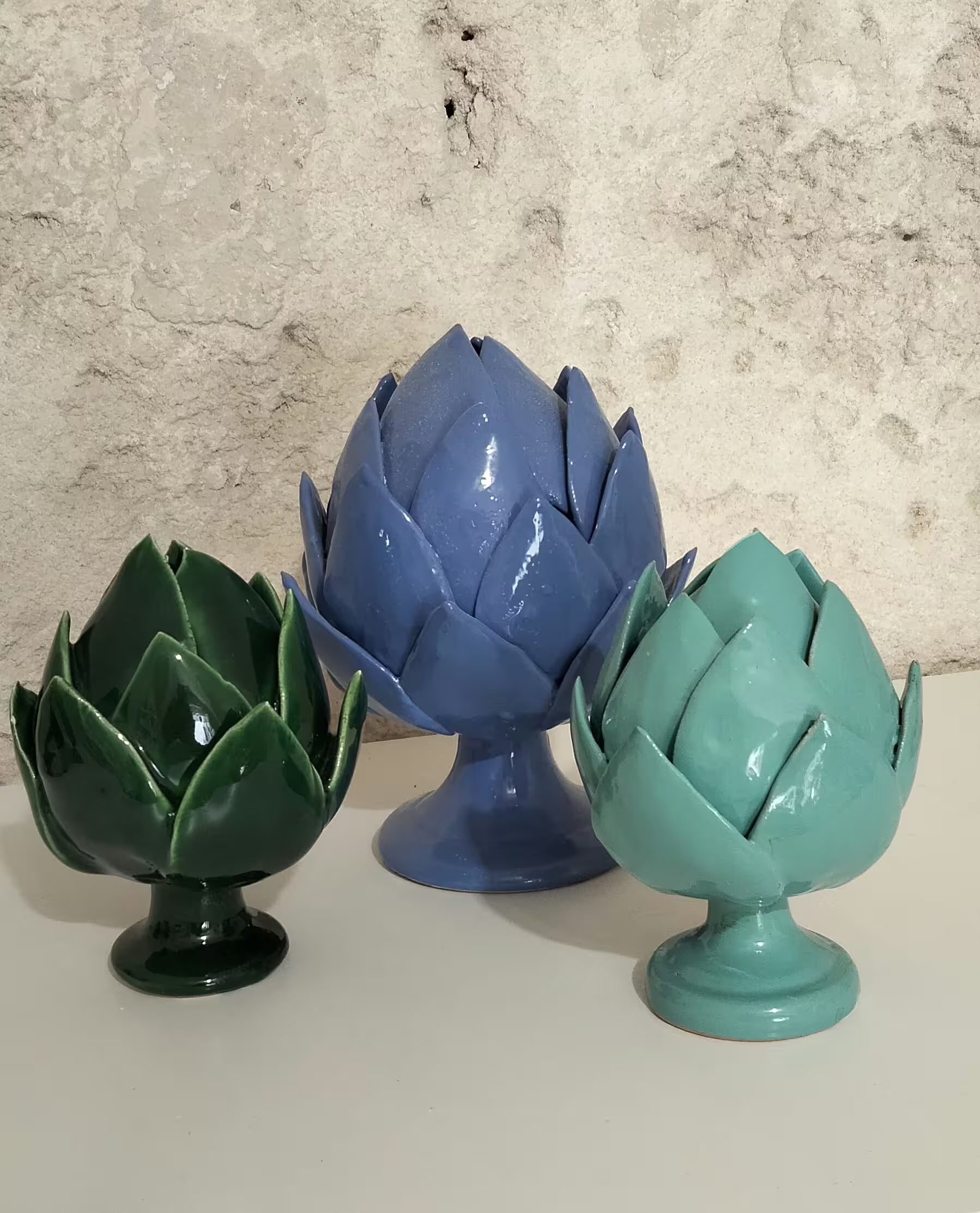
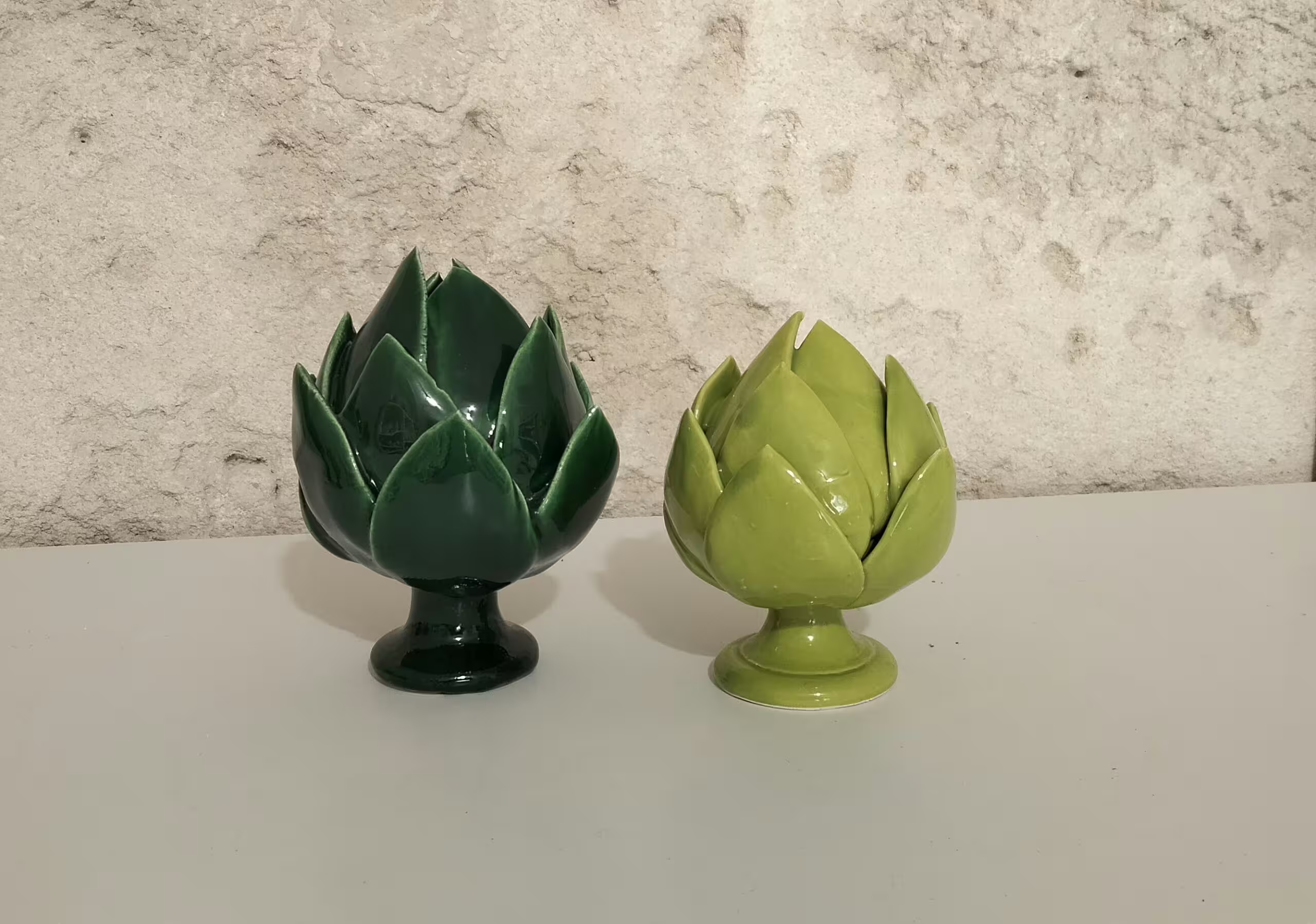
Traditional colors vary by workshop, but the most common are:
-
Ramina green (the most classic, intense, and deep shade, reminiscent of the natural color of a fresh artichoke);
-
Cobalt blue, ochre yellow, cream white, or even metallic glazes in more modern or artistic versions;
-
In some contemporary interpretations, the artichoke may be entirely gold or silver, becoming a design object or a piece of decor.
Symbolic meaning:
In Apulian folk culture, the artichoke represents hospitality, abundance, and protection. Traditionally, it was given as a good-luck charm for the home or placed at the entrance to homes, often in pairs, as a sign of welcome. Its outward-opening leaves symbolize the generosity and fertility of the earth.
Dimensions:
Sizes vary: from small models measuring just a few centimeters, used as ornaments or party favors, to pieces 40–60 cm tall, often used as decorative elements for shelves, columns, or terraces.


Reviews
There are no reviews yet.